
Context: Rice Designathon
Timeline: (2025)
Collaborators: Stella Park, Yuka Masamura
Tools: Figma, Prototype
Pocketea–short for “teacher in your pocket”–is a gamified edtech platform that makes social-emotional learning easily accessible for kids aged 4-8. Through a personalized avatar, young children navigate interactive, choice-driven stories where their decisions shape the outcome.
By blending storytelling, gamification, and edtech innovation, Pocketea turns learning into play with collectible badges, star-based rewards, and customizable avatars. With an intuitive, interactive design, Pocketea empowers kids to develop emotional intelligence and navigate social situations with confidence.
The Challenge
How do we stay human in the age of AI?

Defining our direction
We began by holding an ideation session on the whiteboard about what we value as humans. Common themes that emerged centered around the social-emotional experiences we learn through face-to-face communication. We noticed that younger children, particularly those in preschool and early elementary school—are more than often overlooked in discussions about AI’s influence.
One of the primary concerns about AI was the potential over-reliance on AI-driven social chatbots, which could contribute to an overall decline in real-world social skills. Whereas teens and adults possess greater media literacy and an awareness of AI-related risks such as misinformation, bias, and over-dependence, younger kids may lack the experience, and critical thinking skills needed to discern these dangers.

01) Research
While some research suggests that AI can serve as an effective learning tool when designed with proper pedagogical principles, its role in social-emotional development remains uncertain. Social-emotional learning (SEL) is essential in helping K-12 students discern truth from false information online (Prothero, 2023). Studies show that early exposure to SEL through interactive and engaging mediums is crucial for young children, who often learn best through stories and play-based experiences.
For example, illustrated children’s books have been found to effectively foster SEL. Research suggests that these narratives help younger kids identify emotions and social interactions through the characters' actions including self-awareness, self-management, social awareness, relationship management, and responsible decision-making (Bascal 1).
To deepen our understanding, we Interviewed with Liam Henson, a child counselor in Boston who works with children ages 6-14. Henson mentioned that in his practice, it is crucial to “guide [the kids] through how to think coherently and practice using words.” He also said using games, such as card and board games, are particularly effective tool for fostering communication skills.
Henson’s insights reinforced our belief that gamifying interactions could provide younger children with meaningful opportunities to develop essential communication and social skills that are so uniquely human and not replicable by AI.

02) Lo-Fi Sketches & Idea creation
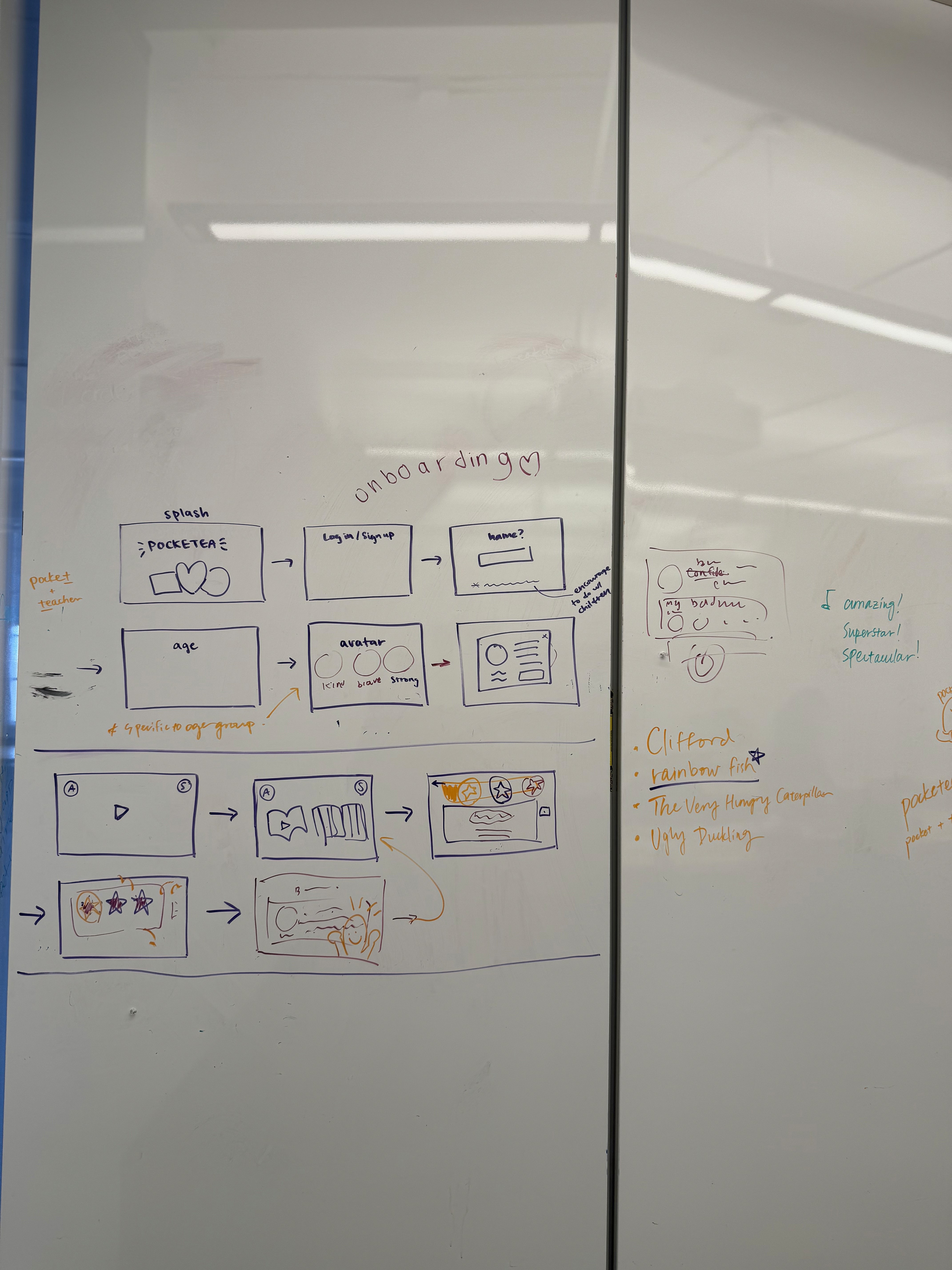
On the whiteboard with everyone organizing our thoughts on the page structure. We benchmarked leading apps like Khan Academy Kids and DoBrain to understand how they personalize learning experiences.

03). Visual System
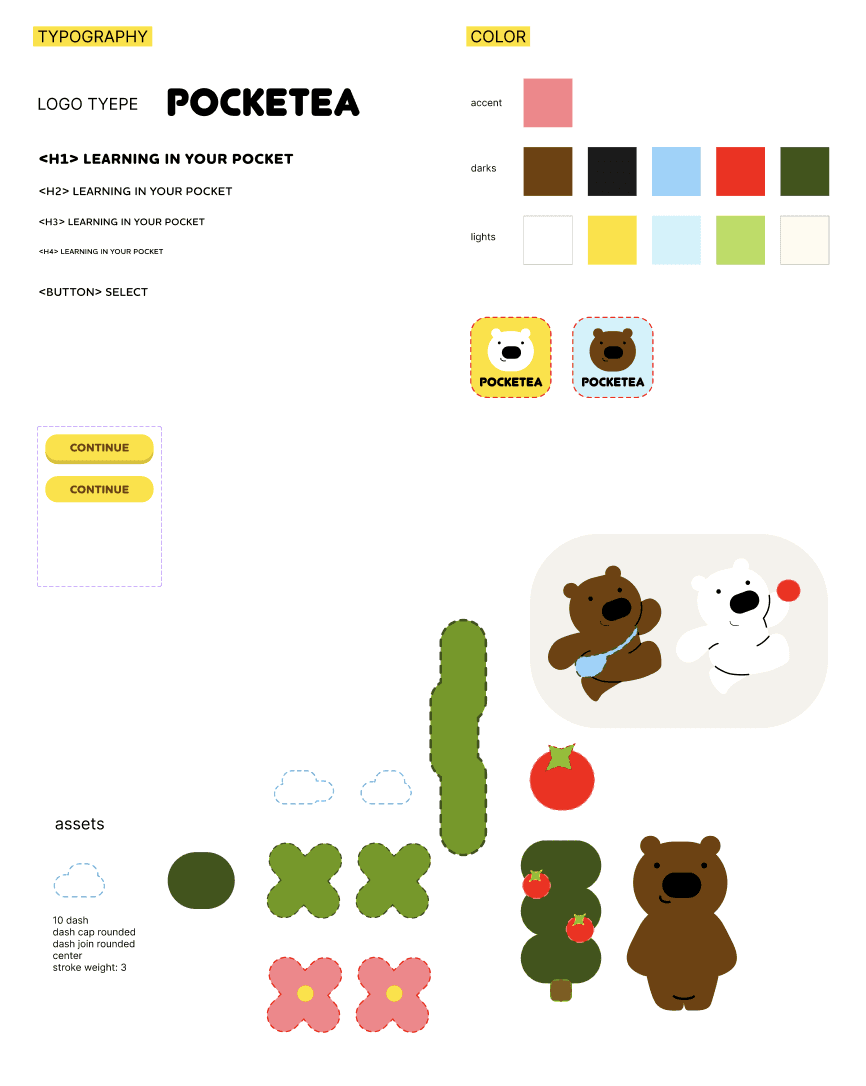
We focused on creating assets in cute characters and world building. Given that our primary users are children aged 4-8, we focused on creating a highly visual, text-minimal interface. Rather than overwhelming users with instructions, we incorporated universally recognizable icons, limited on-screen elements to reduce cognitive load, and used interactive animations to sustain engagement.

04) Features

1) Avatar selection: Onboarding process where the avatar determines the lesson

2) Profile: Shows your avatar and badges you have earned

3) Home: User starts their experience after onboarding process
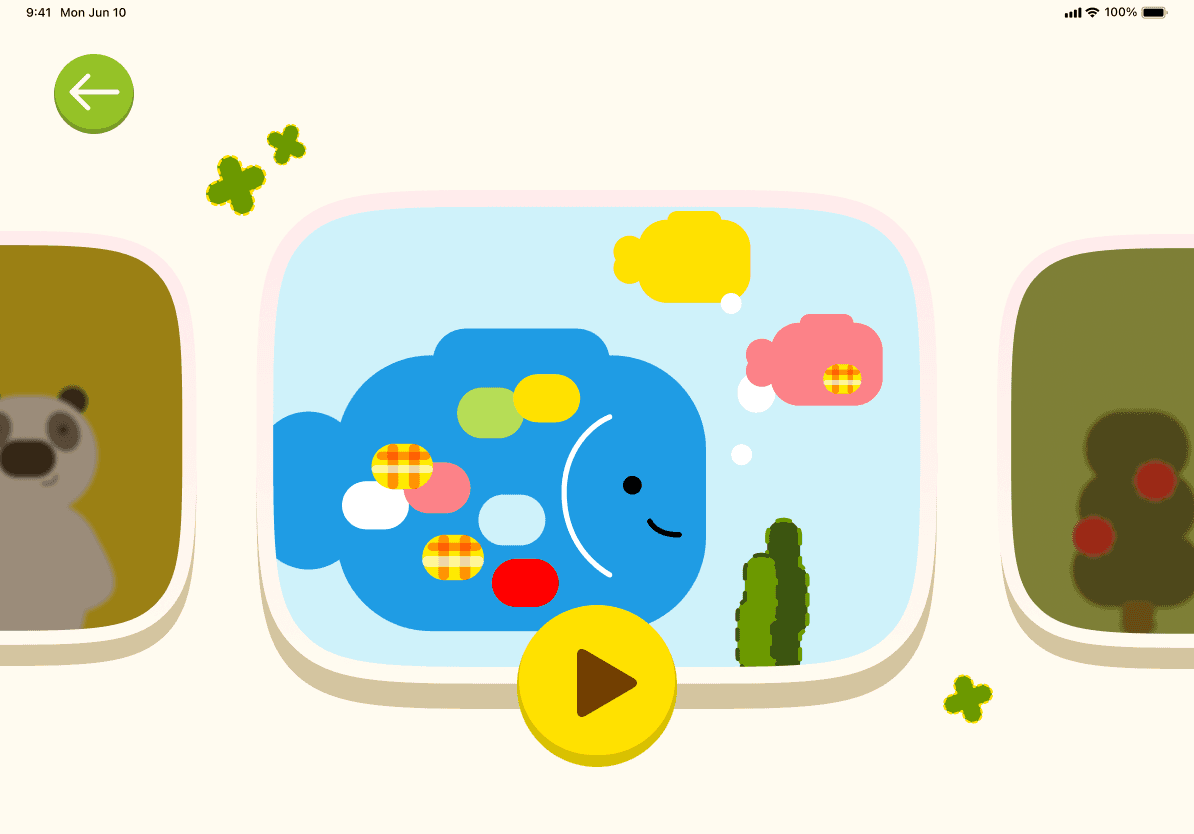
4) Lesson: Kids go through narrative-based decision-making scenarios & parents can select an avatar that symbolizes each curriculum–for ex choosing “Kind Polar Bear” prioritizes content focused on kindness and empathy, such as the Rainbow Fish.

05) Lesson in Progress: The lessons have an audio feature that guides the kids to make a choice easier and make the lesson more dynamic. The kids are given a choice on an action to take that teaches a lesson about social-emotional cues.

06) Result: After the lesson ends, the kids are awarded with a star and a badge.
05) Final Prototype
06) Thoughts